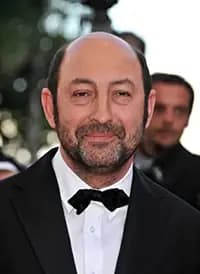
Les choristes
Commedia · Dramma · Musica
68%
Rotten Tomatoes
7.9/10
IMDb · 72.8K voti
Critica e pubblico d'accordo
Un coro di voci bianche che trasforma un riformatorio in un luogo dove la musica vince sulla disciplina del rancore
In questa collezione
Non sai cosa guardare?
Prova la RouletteLa Sala non ha ancora tracciato fili per questo film. Accedi per farglieli cercare.
Disponibilità via JustWatch e Streaming Availability — piattaforme e prezzi possono cambiare.
Fond de l'Etang is a boarding school for troubled boys located in the French countryside. In the mid-twentieth century, it is run by the principal M. Rachin, an egotistical disciplinarian whose official unofficial mantra for the school is "action - reaction", meaning that there will be severe consequences for any boy out of line. This approach does not seem to be working as the boys as a collective are an unruly bunch. In turn, the teachers don't teach, but are always watching out for the next subversive act from the boys. January 15, 1949 marks the arrival to the school of the new supervisor, M. Clément Mathieu, a middle-aged man who is grasping at finding his place in life after a series of failed endeavors. Although he does find the boys an unruly lot, Mathieu does not believe in the "action - reaction" policy, and as such, butts heads with Rachin while secretly undermining the policy. Slowly, Mathieu's approach of trying to match the discipline to the crime does have a positive effect on a handful of students. With the reluctant approval of Rachin, Mathieu begins a grander experiment of trying to transform the overall atmosphere within the school, core within the experiment being to start a choir among his students. This move is a difficult one for him as a failed musician, as well as for the initially reluctant students. During this process, Mathieu focuses on two different students for two different reasons. Pépinot, a younger boy, seems to lack guidance and focus, and who always says he is waiting for Saturday when his father will pick him up, he who never does. And Pierre Morhange, an older student, is the anachronism: introverted, but prone to outbursts of individual subversiveness - the devil with the face of an angel as the other teachers describe him. Behind the reason for his subversiveness, which Mathieu slowly learns, Morhange hides a love of music and a true talent in it. Beyond overcoming the obvious obstacles of Rachin and the students' skepticism and Rachin's egotism, Mathieu has another challenge in newly arrived Pascal Mondain, a truly troubled older boy with pathological tendencies whose presence alone may wreak havoc throughout the school, and not just with Mathieu's project. Over fifty years later, Morhange and Pépinot, who have not seen each other since that time and who did not spend that much time together while at school, are reading through Mathieu's memoirs from his time at the school, which unmasks the reason why the two are privy to the memoir and the effect he had on their lives.
Christophe Barratier, Georges Chaperot, René Wheeler, Noël-Noël, Philippe Lopes-Curval
Gérard JugnotClément Mathieu
François BerléandHeadmaster Rachin
Kad MeradChabert
Jean-Paul BonnaireFather Maxence
Marie BunelViolette Morhange
Jean-Baptiste MaunierPierre Morhange
Maxence PerrinPépinot
Grégory GatignolPascal Mondain
Thomas BlumenthalCorbin
Philippe du JanerandMr. Langlois
Carole WeissCountess
Erick DesmarestzDoctor Dervaux
Didier FlamandPépinot adult
Jacques PerrinPierre Morhange adult
Armen GodelDoctor
Paul ChariérasRégentNominated for 2 Oscars
Christophe Barratier costruisce un film che funziona perché si fida della semplicità: un collegio per ragazzi difficili, un sorvegliante fallito che scopre nella musica l'unico linguaggio capace di raggiungerli. Niente retorica salvifica, solo un coro che cresce nota dopo nota, mentre i volti chiusi dei ragazzi si aprono senza che nessuno lo annunci. La fotografia di Dominique Gentil riempie l'austerità di quell'istituto francese con una luce calda e nostalgica, che non nasconde la durezza ma la addolcisce attraverso il ricordo.
Gérard Jugnot porta in scena un Clément Mathieu che non è l'eroe, ma l'adulto che prova: le sue intuizioni pedagogiche non sono rivelazioni, sono tentativi, errori, compromessi. Il vero colpo del film è Jean-Baptiste Maunier, il cui timbro di voce cristallino diventa il simbolo sonoro di una trasformazione possibile. Le scene corali—semplici, frontali, senza effetti—conquistano proprio perché fanno della musica un fatto concreto, non una metafora.
Nominato a due Oscar, il film ha saputo toccare un pubblico vastissimo senza cedere alla faciloneria: perché credere che la bellezza possa cambiare qualcosa, raccontato così, non sembra ingenuo. Viene voglia di ascoltare quei ragazzi cantare e ricordarsi che certe storie, raccontate bene, lasciano qualcosa anche quando i titoli di coda scorrono.
Parentele semplici

Se Mi Lasci Ti Cancello
Drama, stessa stagione del cinema

La caduta - Gli ultimi giorni di Hitler
Drama, stessa stagione del cinema

Una luce dal passato
Drama, stessa stagione del cinema

Million Dollar Baby
Million Dollar Baby
Drama, stessa stagione del cinema

Before Sunset - Prima del tramonto
Drama, stessa stagione del cinema

Hotel Rwanda
Hotel Rwanda
Drama, stessa stagione del cinema

Medici per la vita
Medici per la vita
Drama, stessa stagione del cinema

Ferro 3 - La casa vuota
Drama, stessa stagione del cinema